Retinal vs Retinol vs Retinoid: What’s the Difference?

Do you know what retinol, retinal, tretinoin, and retinoids are when shopping for skincare products? Although these terms might be hard to differentiate from each other and seem alike, they are actually not. All these terms fall under the category of skincare ingredients that are not equal in strength. Understanding the differences will assist in making the best choice.
What Is a Retinoid?
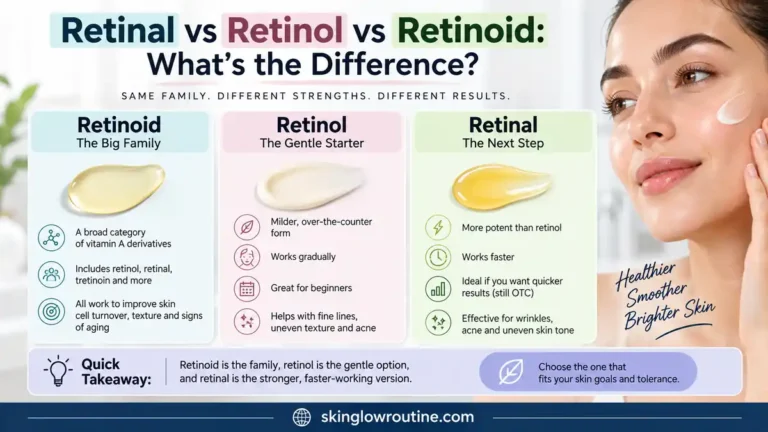
Retinoid refers to the family of compounds derived from vitamin A that are widely used in skincare routine to treat various problems including acne, fine lines, wrinkles, discoloration and roughness of the skin.
The family includes different ingredients like retinol, retinal and tretinoin. The key difference between them is in potency and speed of action. While some retinoids can be found in ordinary cosmetics, others, such as tretinoin, are prescription products.
What Is Retinal?
Retinal, also known as retinaldehyde, is a type of Vitamin A, which falls right in between the other retinoids in intensity. Retinal requires just one single conversion within your skin in order for it to transform into retinoic acid, which will be the active component that will be doing all the job.
Being less intense than retinol by just a little, retinal is quicker at producing visible effects, such as better skin tone and firmness along with smooth fine lines, although it is non-prescription. It may cause you to feel more sensitive than retinol, making it ideal for those who have developed some resistance to retinoids.
What Is Retinol?
Retinol is the most gentle type of retinoid and is considered to be the best choice for someone who is just beginning their journey with retinoids. While retinal and tretinoin work right away upon application, retinol has to undergo a two-step process of conversion: into retinaldehyde and further into retinoic acid.
This is why retinol tends to be less irritating; however, because it needs time to work, it will take some time until visible changes become apparent. If used regularly, retinol can reduce the appearance of wrinkles and improve overall skin texture.
Also Read: Can I Use Retinol After Salicylic Acid Face Wash?
Retinal vs Retinol vs Retinoid: The Simple Breakdown
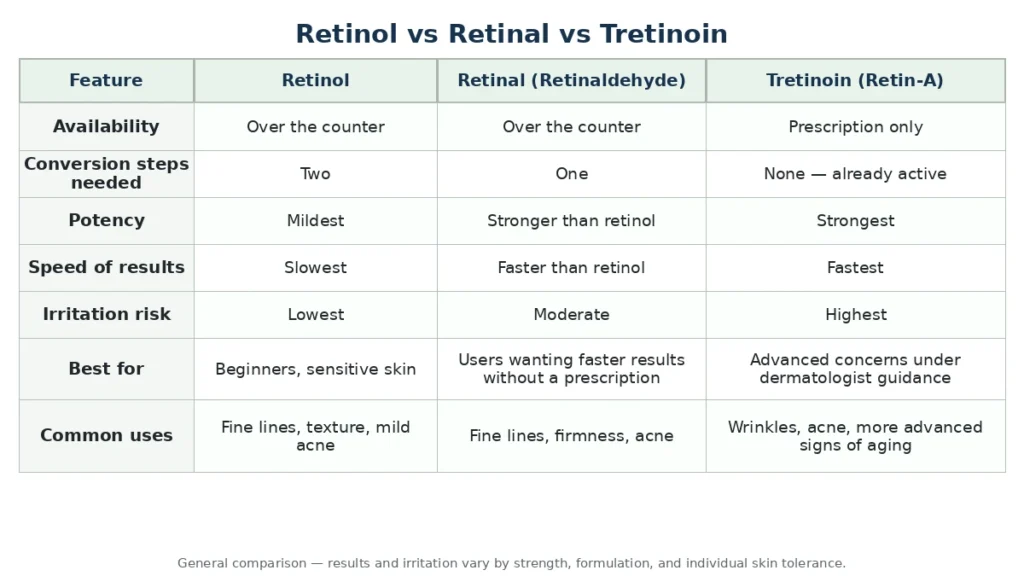
- Retinol requires conversion two times before it becomes active. It is converted first to retinal, then to retinoic acid. Being the mildest and slowest acting method, it is also the easiest method for the beginner.
- Retinal (also known as retinaldehyde) requires just one step before it is activated. It is intermediate in potency between retinol and tretinoin. It works faster than retinol but is still available over-the-counter.
- Tretinoin (Retin-A) is already in the form of retinoic acid. Thus, no conversion is needed, and that is why it acts the quickest and is the strongest; however, it is also the most likely to irritate, dry out, and cause peeling of the skin.
Comparison Table: Retinol vs Retinal vs Tretinoin
Tretinoin vs Retinol for Wrinkles
This is one of the most common comparisons people search for, and the honest answer is: both work, but differently.
- Tretinoin starts working from the moment it comes into contact with your skin, which means that you will see results more quickly compared to the other two when it comes to wrinkles and skin texture. However, there is a price to pay, and it is the one that is most prone to causing irritation.
- Retinol works slower because it will need two rounds of conversion to work effectively. However, it is less irritating, which means it is easier to use consistently, which is more important than power when working for extended periods.
Retinol is normally considered the safer option if you are new to using actives and if your skin is very sensitive. However, if you already have some tolerance levels and desire quick and more drastic results for deep wrinkles, tretinoin should be used.
What Is the Difference Between Retinoid and Retinol?
It is a popular query because people usually consider retinoid and retinol to be the same terms. However, it is not the case.
Retinoid is the collective term for vitamin A compounds that are used in cosmetics. These vitamin A compounds include retinol, retinal, and prescription retinoids such as tretinoin.
Retinol is one of the types of retinoid, and it is one of the least powerful types among others.
In other words, retinol is a subset of the retinoid family of vitamin A compounds.
Choosing the Right One for Your Skin
Your choice really comes down to your experience level and how your skin tolerates actives:
- Never used retinoids before or have skin that is very sensitive? Try retinol. It is mild enough to develop tolerance without overwhelming the skin barrier.
- Confident using retinol and need quicker results? Retinal can be a natural next step, providing additional power while remaining over-the-counter.
- Do you have persistent acne or visible signs of aging? Then tretinoin prescribed by a dermatologist will help you in solving this problem. Nevertheless, your skin may become dry, irritated, or flushed in the initial stages of using this drug.
Need Know about your skin type : What Is My Skin Type? A Complete Guide to Understanding Your Skin
Whichever option you choose, a few rules apply across the board:
- Apply retinoids only at night as they tend to degrade when exposed to light and make you more sensitive to the sun.
- Follow up the next day by using sunscreen without fail.
- Begin with a less frequent use pattern (2-3 nights per week), irrespective of whichever retinoid you pick.
- Combine it with an effective moisturizer to counteract any dryness caused, especially during your initial weeks of use.
- Discontinue their use if there is any persistent irritation, redness or flaking.
Retinoids is the common name for this category, retinol and retinal being two relatively mild, OTC retinoids, while tretinoin is the more potent prescription retinoid. For beginners, the safest option is retinol. For fast results without having to use a prescription retinoid, retinal should be considered. However, for deep lines and severe acne problems, tretinoin should give the best results when used cautiously. As many dermatologists say, the retinoid that can be used regularly will work better than the more potent option that cannot be tolerated.
FAQ
Also Read:
What Does Salicylic Acid Do for the Skin?
Cetaphil Gentle Skin Cleanser vs Oily Skin Cleanser: Which One Should You Buy?
Reference
https://www.lovelyskin.com/blog/p/retinal-vs-retinol-vs-retinoids-whats-the-difference

I’m Suma Angari, Founder of SkinGlowRoutine.com and an SEO Executive passionate about digital marketing and skincare. I share SEO tips, blogging ideas, and natural skincare guides to help you grow online and glow naturally.
View All Articles