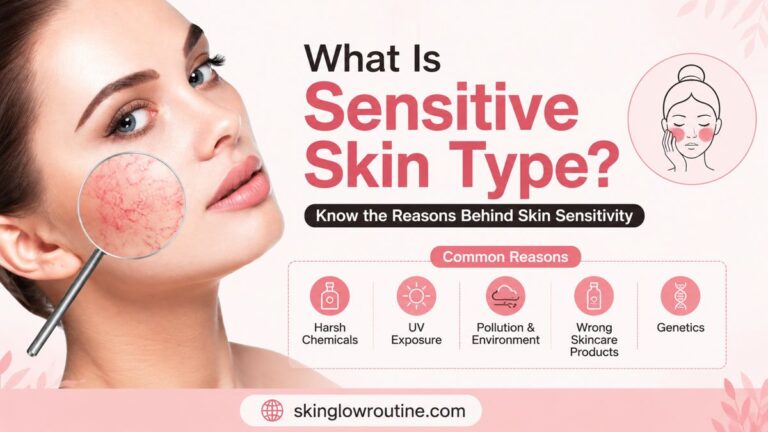
What Is Sensitive Skin Type? Know the Reasons Behind Skin Sensitivity

What Is Sensitive Skin?
They include such elements as products, weather, pollution, and even stress. Rather than enduring all these silently, sensitive skin reacts aggressively to them, leading to redness, itching, burning, tightness, or dryness.
This means that while normal skin is comfortable when using any facial wash, if one has sensitive skin, it could result in reddened, irritated, and dry skin for several hours after washing the face.
How Do you know if Skin is Sensitive?
Sensitive skin is easily identifiable if the skin becomes reactive due to the daily routine. The symptoms of such sensitivity are redness after washing the face, an itchy/burning sensation after using any particular product, a dry and taut feeling of skin that appears temporarily, presence of small bumps/lesions on the skin surface for no reason at all, and stinging sensation even when using mild moisturisers or plain water.
What Does Sensitive Skin Feel Like?
Signs of sensitive skin include any of these:
- Facial redness – when the face blushes or goes pink very easily
- Prickling or itching – particularly after applying an ingredient or being in the sun
- Drying up with scaly skin – when the skin gets tight and sheds itself in flakes
- Pimples/bumps – when little bumps or spots develop without any obvious cause
- Painful/tingling feeling – where even water or a mild lotion hurts the skin
Why Does Sensitive Skin Happen?
Your skin has an outer protective barrier known as the epidermis. This barrier protects the skin from moisture loss and irritants.
Sensitive skin has a weak outer protective barrier compared to regular skin. Therefore,
- It loses moisture faster, making your skin feel dry and tight.
- More allergens and irritants enter the skin, causing an allergic reaction.
- Your skin reacts strongly to things that won’t normally affect your skin.
There could be many reasons behind this:
Genetics – Some individuals have naturally thin and sensitive skin.
Age – As we age, the production of collagen is reduced and thus the protective barrier of the skin gets thinner.
Environmental factors – Exposure to toxins, pollutants, excessive sun exposure, dry weather, or pollution weakens the skin barrier.
Products with wrong ingredients – Fragrant products, alcohol-based products, or products containing other irritating substances harm the skin barrier.
Unhealthy diet and lifestyle habits – Spicy food, excessive alcohol intake, or mental stress lead to skin sensitivity.
Skin disorders – Skin diseases like eczema, rosacea, psoriasis, or contact dermatitis cause skin sensitivity.
What are the 4 types of sensitive skin?
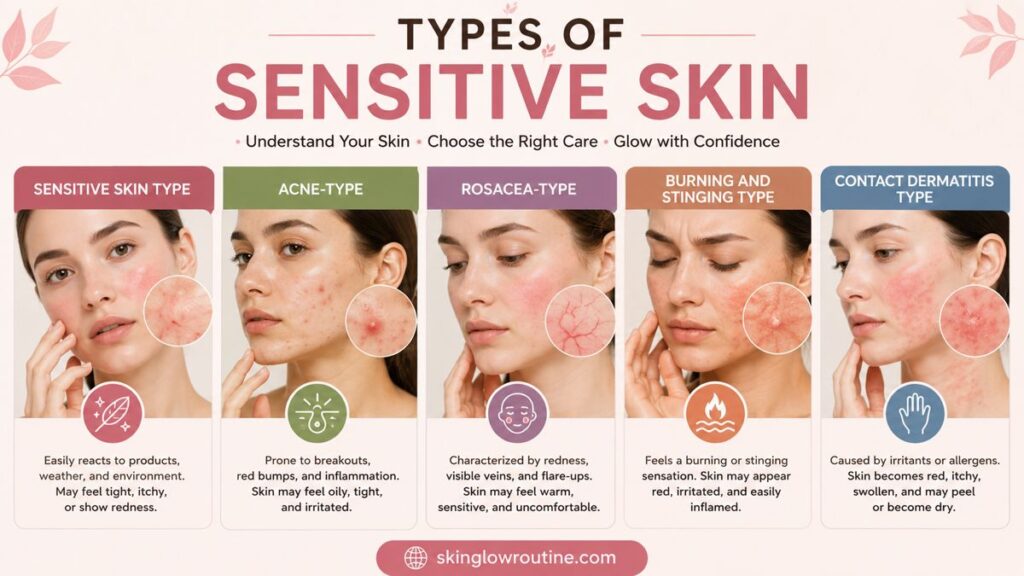
The 4 types of sensitive skin include:
Acne-like – skin prone to breakouts such as pimples, blackheads or whiteheads as a result of plugged or irritated pores
Rosacea-like – skin prone to become easily flushed, particularly on cheeks and nose, and may have visible blood vessels on its surface
Stinging and burning skin – skin that develops a burning and stinging reaction on application of any product
Contact dermatitis skin – skin which breaks out or becomes irritated by contact with specific materials like fabrics, metals, or ingredients in skin care products
Conclusion
Sensitive skin is a skin type that gets irritated easily by external factors such as climate changes, skin care products, strong chemicals, dust, heat, and allergens. Knowing what is sensitive skin type will give you insight into what causes your skin irritation, including reddening, itching, and dryness. It is common for many people to wonder what is sensitive skin and its causes. Fragrances, strong soap products, pollution, changes in the weather, and the use of too many skin care products are just some of the causes of sensitive skin. Sensitivity occurs mainly due to the weakness of the skin barrier, dehydration, allergies, or specific skin diseases.
Also Read:
Combination Skin Care Routine Home Remedies: 15 Easy DIY Treatments That Really Work
Best Normal Skin Routine: Easy Steps for Clear Skin
How To Get Korean Glass Skin Naturally At Home | Homemade Korean Skin Care Routine
FAQ about sensitive skin care

I’m Suma Angari, Founder of SkinGlowRoutine.com and an SEO Executive passionate about digital marketing and skincare. I share SEO tips, blogging ideas, and natural skincare guides to help you grow online and glow naturally.
View All Articles