What Is the Difference Between AHA and BHA?

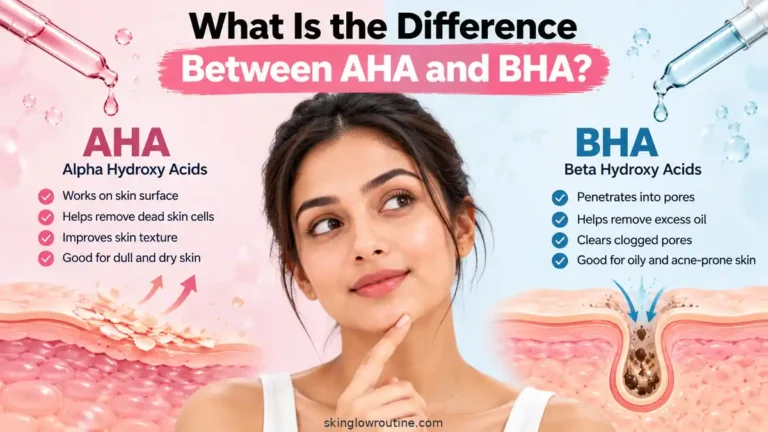
AHA (alpha-hydroxy acid) exerts its effect on the surface of the skin and is suitable for dry, dull, or uneven skin. BHA (beta-hydroxy acid), however, penetrates into pores and is suitable for oily skin. According to Healthline, both of these are not “better than each other.
What Is AHA and BHA?
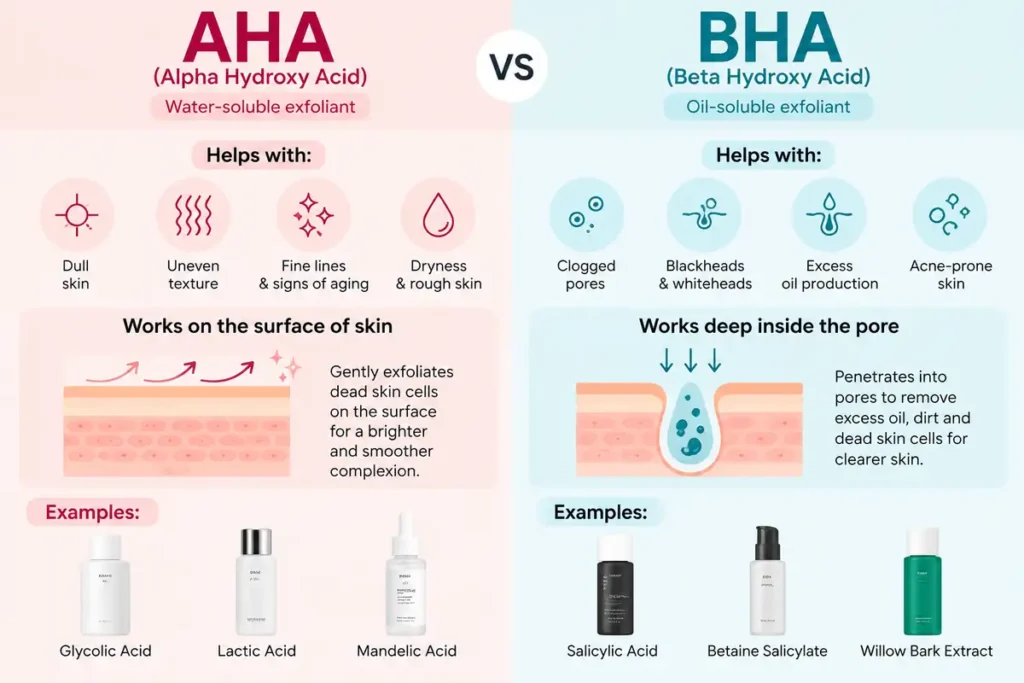
Both are exfoliants. They loosen dead skin cells so fresh skin shows up, which can make skin look smoother and brighter.
- AHA is water-soluble and often comes from fruit, sugar or milk. Common types are glycolic, lactic, tartaric, citric and malic acid.
- BHA is oil-soluble. The most common one is salicylic acid.
What Is a BHA Exfoliant?
The BHA exfoliation product is a treatment that contains salicylic acid in concentration from 0.5 to 5 percent. The BHA exfoliating ingredient is oil-soluble, and it means that it can penetrate into the pores to remove excess oil and dead skin. That is why the treatment is used to treat blackheads and acne.
What is a AHA Exfoliant?
The AHA exfoliant is a water soluble skin care chemical product obtained either naturally or artificially from fruits, milk, and sugar cane. The action of the AHA exfoliants is by dissolving the bonds between the dead cells of the skin surface.
What Is the Difference Between AHA and BHA Exfoliants?
| AHA | BHA | |
|---|---|---|
| Dissolves in | Water | Oil |
| Works on | Skin surface | Inside pores |
| Best for | Dullness, uneven tone, fine lines, mild dark spots | Oily skin, blackheads, acne |
| Common ingredient | Glycolic, lactic acid | Salicylic acid |
| Skin type | Dry or normal skin; go slowly if sensitive | Oily or combination skin; milder options for sensitive skin |
| Sun sensitivity | Higher, so daily sunscreen is a must | Lower, but sunscreen is still advised |
L’Oréal Paris India’s guide agrees: AHA for dry or sun-damaged skin, BHA for oily or acne-prone skin, and BHA as the gentler choice for sensitive skin.
Real User Experiences With The Ordinary AHA 30% + BHA 2% Peeling Solution
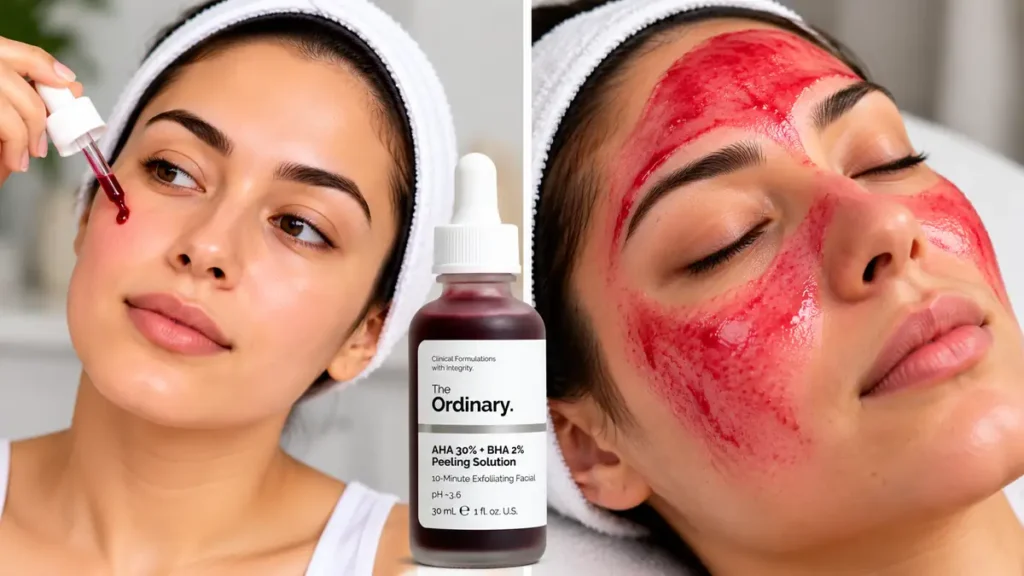
These are two genuine reviews from independent beauty sites. They don’t say whether the writers live in India or the US, and your skin may react differently.
Aly, Style Vanity (2017). She has oily and prone to acne skin. She has been using it since about one month after she had undergone a chemical peel. She tried twice a week and then opted for once a week “just to be safe.” She observed no change in the initial couple of weeks but started seeing the effect from around two months.
Ana Vasilescu, Women’s Concepts (2021). After years of acne and scarring, she used it once a week for a month, then twice a week. After four months she reported clearer, brighter, smoother skin and some faded acne marks. It stung for about the first minute and the redness faded within 20 minutes. She followed with a hyaluronic acid serum.
How to Use The Ordinary AHA 30% + BHA 2% Peeling Solution?
This is a strong 10 minute peel with 32% total acids (30% AHA, 2% BHA). The Ordinary says it is only for experienced users of acid exfoliation. Their directions:
- Use once or twice a week, ideally in the evening.
- Apply to clean, dry skin. Never on wet skin.
- Avoid the eye area.
- Leave on for no more than 10 minutes.
- Rinse thoroughly with lukewarm water.
- Patch test first. Do not use on sensitive, peeling or broken skin.
AHA 30% BHA 2% Peeling Solution: What to Use After?
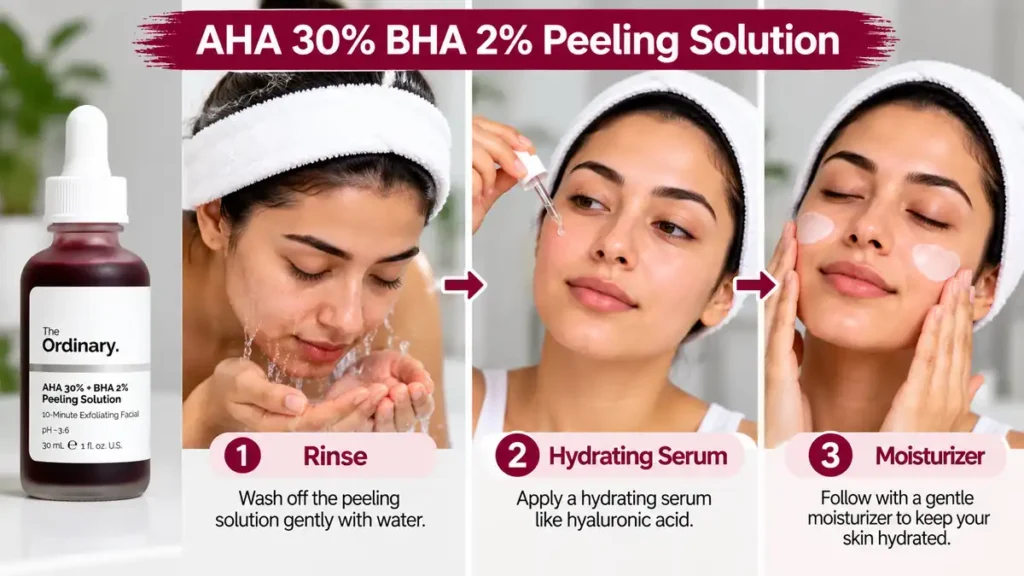
Keep it simple after rinsing:
- A gentle hydrating serum, such as hyaluronic acid (what Ana used).
- Moisturizer. L’Oréal Paris India also suggests a serum and moisturizer after AHA exfoliation.
- Sunscreen the next morning. The Ordinary says to protect your skin from the sun while using it and for a week afterward. In hot, sunny weather, this matters even more.
Skip retinoids, direct vitamin C, peptides and other acids on peel night. The Ordinary lists these as products not to use with it.
Simple evening routine: rinse, hydrating serum, moisturizer Image 3 alt text: Evening routine after an acid peel: rinse, hydrating serum, then moisturizer.
Can You Use BHA and AHA Together?
Yes, but carefully. Healthline says many products contain both, but you shouldn’t layer separate AHA and BHA products on top of each other, because that can cause dryness and irritation. Instead:
- Use one in the morning and one at night, or
- Alternate days, or
- Use AHA on dry areas and BHA on oily areas.
If you want to try them together, start slowly.
Read more about it on reddit
Can You Use AHA and BHA While Pregnant?
Please check with your doctor first. Paula’s Choice says small amounts of salicylic acid (1 to 2 percent) are considered low risk, and that glycolic and lactic acid can be considered, but it stresses checking with your physician before using any product. The Ordinary’s page for this peel doesn’t mention pregnancy at all, and 32% is a very strong peel. My advice: don’t use this peel during pregnancy unless your doctor says it’s okay.
Direct Answers to Your Questions
| Question | Short answer |
|---|---|
| What is the difference between AHA and BHA? | AHA exfoliates the surface; BHA works inside pores. |
| What is AHA and BHA? | Two types of chemical exfoliants that remove dead skin cells. |
| What is a BHA exfoliant? | A product with salicylic acid that clears oil and dead skin inside pores. |
| AHA 30 BHA 2 peeling solution: what to use after? | Hydrating serum, moisturizer, and sunscreen the next morning. |
| Can you use AHA and BHA together? | Yes, but alternate them instead of layering, and start slowly. |
| Can you use AHA and BHA while pregnant? | Ask your doctor first. Don’t use this strong peel unless approved. |
Conclusion
Pick AHA for dull, dry skin and BHA for oily, clogged skin. Start slowly, patch test, and always wear sunscreen. If your skin burns, peels or stays red, stop and see a dermatologist.
This is general information, not medical advice.
Sources: Healthline: AHA vs. BHA · L’Oréal Paris India · The Ordinary product page · Style Vanity review · Women’s Concepts review · Paula’s Choice on pregnancy · Reddit thread (r/SkincareAddiction)
Also Read:
Which Serum is Best for Pigmentation and Dark Spots
Niacinamide vs Salicylic Acid: Which One Should You Use?
FAQ:
moisturizer

At SkinGlowRoutine, we love making skincare simple and enjoyable! Our editorial team shares helpful skincare tips, beauty advice, and easy-to-understand guides to help you discover what works best for your skin. Let's make your skincare journey a little easier, one routine at a time! 💚
View All Articles