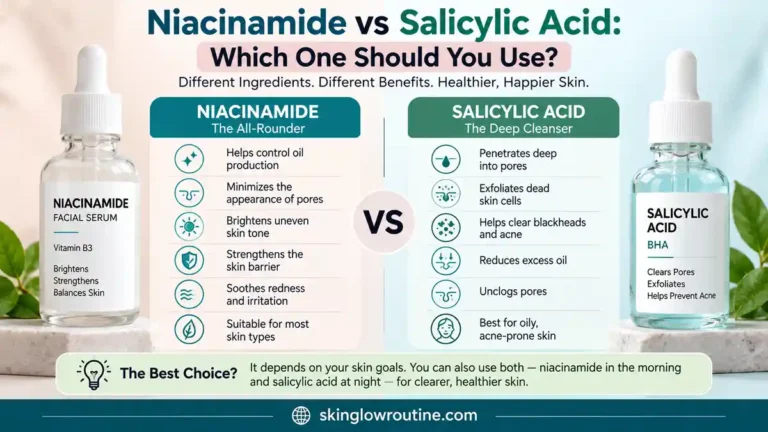
Niacinamide vs Salicylic Acid: Which One Should You Use?

In skincare, there are two products that always seem to be in the limelight; Niacinamide and Salicylic Acid. Both are highly potent, yet their uses different purposes
If you want to reduce any kind of skin inflammation and increase hydration and skin luminosity, then you definitely need Niacinamide. But if you’re looking for something that will deep clean, exfoliate and prevent any acne formation, then you have Salicylic Acid!
So, which one to choose? Should you choose both? Well, it all depends on your skin type, problems and skincare needs!
What Is Niacinamide?
Niacinamide is a type of vitamin B3 that has the reputation of being among the safest and most flexible skin care ingredients. Niacinamide can be used on any type of skin, even sensitive skin.
Key benefits of niacinamide:
- Calms redness and inflammation
- Regulates oil production without stripping the skin
- Helps minimize the appearance of pores over time
- Strengthens the skin’s natural barrier
- Brightens skin tone and fades dark spots
Niacinamide takes time to work, unlike other products that help exfoliate and make pores smaller. Niacinamide helps regulate sebum and increases skin elasticity, making pores appear smaller after continued use.
What Is Salicylic Acid?
Salicylic acid is a BHA (beta hydroxy acid), and it is classified as a gold standard ingredient to treat acne. It is an active exfoliating agent and is oil-soluble, meaning it can penetrate within your pores instead of sitting on top of them. check out our full guide on what salicylic acid does for the skin.
Key benefits of salicylic acid:
- Clears clogged pores from the inside
- Treats and prevents blackheads and whiteheads
- Reduces active breakouts and inflammation
- Smooths rough texture through exfoliation
- Controls excess oil by breaking down built-up sebum
Since salicylic acid is a stronger active, it requires more caution when using compared to niacinamide, particularly if you have sensitive skin.
Niacinamide vs Salicylic Acid: Comparison Table
| Feature | Niacinamide | Salicylic Acid |
|---|---|---|
| Type | Vitamin B3 derivative | Beta-hydroxy acid (BHA) |
| Main function | Calms, hydrates, brightens | Exfoliates, clears pores |
| Best for skin type | All types, especially sensitive/dry | Oily, acne-prone, combination |
| Exfoliation | None | Chemical exfoliant |
| Oil control | Regulates oil gradually | Dissolves oil directly in pores |
| Acne treatment | Reduces redness, fades marks | Treats and prevents active breakouts |
| Irritation risk | Low | Moderate to high if overused |
| Frequency | Can be used daily, even twice daily | 2–3 times a week to start |
| Results timeline | 4–8 weeks | 2–4 weeks for acne |
Niacinamide Serum vs Salicylic Acid Serum: Which Is Better for Your skin?
Choose niacinamide if:
- You have sensitive, dry, or easily irritated skin
- Your main concern is dullness, redness, or dark spots
- You want a gentle, beginner-friendly product you can use daily
Choose salicylic acid if:
- You have oily skin type or acne-prone skin.
- You are having blackheads, whiteheads, or breakout issues.
- You want to exfoliate and improve skin texture.
- You are suffering from overproduction of sebum/oil in the skin.
For oily skin specifically:
It really depends on what you are dealing with since there is not necessarily one that is “better” than the other. If you suffer from excess oil production and large pores, then niacinamide is the way to go. For blackheads and whiteheads, salicylic acid works wonders.
Is Niacinamide or Salicylic Acid Better for Acne?
Salicylic acid is often the better choice to treat active acne because its mode of action is more direct, in that it clears up any blockage in the pores which causes the breakouts.
Niacinamide, on the other hand, will not directly help in getting rid of existing acne, but it will reduce inflammation and redness and lighten any dark spots caused by acne. That is why many dermatologist-approved skincare regimens incorporate both into their treatments.
Can You Use Niacinamide and Salicylic Acid Together?
Yes – actually, it is a common combination recommended to use, provided that your skin agrees with both the ingredients. Reference
How to layer them:
- First wash your face and pat it dry.
- Next apply your salicylic acid serum and leave it for 30–60 seconds to be absorbed.
- Afterwards apply your niacinamide serum for hydration and calming of possible irritation.
- Moisturize the skin after.
- Apply sunscreen daily due to increased sun sensitivity when using salicylic acid.
If you’re a beginner, use niacinamide during the day and salicylic acid a few nights a week. This helps your skin adjust without irritating it.
Who Should Use Both?
- Oily Skin: Niacinamide controls sebum production, whereas salicylic acid unclogs pores.
- Combination Skin: Apply salicylic acid to oily zones, and use niacinamide for moisture.
- Acne-Promoting Skin: When used together, they help cure acne and calm the skin without drying it out excessively.
Common Mistakes to Avoid
- Overusing salicylic acid : Applying it on a daily basis will cause drying and destruction of your protective moisture barrier. Go easy.
- Skipping sunscreen: Salicylic acid increases sun sensitivity, so SPF 50 higher is a must.
- Expecting overnight results: Niacinamide takes weeks to show visible changes in tone and texture; salicylic acid needs consistent use to clear pores.
- Over-layering with too many active ingredients at one timeon ypour face . Using salicylic acid, retinol, and additional acids in combination is just too much for your skin; use less until you have built up a tolerance. This is also true when using vitamin C; if you want to know more about vitamin C serum and your skin, click here to find out!
What Real Users Say?
If you search “niacinamide vs salicylic acid” on Reddit or any skincare forum, you will see that there is a consistent trend where people who have oily and/or acne-prone skin will opt for the salicylic acid serum in order to help deal with their acne and blackheads, while the other people will use niacinamide serum because of their pursuit for even skin tone, clearer skin, and smaller pores. One common tip when using both is to use only one of the two first and then add the second one after your skin has adapted to it.
Check here
Go to SkincareAddiction
Both salicylic acid and niacinamide have their own unique benefits, which makes them great ingredients to include in your skincare routine. Niacinamide should be your choice for those wanting hydration, soothing, and skin brightening. Salicylic acid, on the other hand, works best if you want exfoliation and acne-clearing treatments.
Better yet, these two ingredients can be combined for a balanced skin care experience.
FAQ:
Salicylic acid is usually better for clogged or enlarged-looking pores because it exfoliates inside pores and helps remove excess oil. Niacinamide can help regulate oil and improve the appearance of pores over time.
Yes. 2% salicylic acid can be effective for blackheads and clogged pores. Start a few times a week and increase use only if your skin tolerates it.
Niacinamide can help strengthen the skin barrier, reduce excess oil, improve uneven skin tone, and minimize the appearance of pores. It is also generally well tolerated by many skin types.
Neither is universally better. Vitamin C is mainly used for antioxidant protection and brightening, while niacinamide is useful for oil control, barrier support, redness, and uneven skin tone. They can also be used together.
Yes. Niacinamide can generally be used daily, morning or evening. Apply it after cleansing and before moisturizer, and use sunscreen during the day.
Some people can use salicylic acid daily, but it depends on the product and your skin’s tolerance. If you’re new to it, start 2–3 times a week to reduce the risk of dryness and irritation.
The main disadvantages are dryness, peeling, redness, and irritation, especially when used too frequently or with other strong exfoliating products. Sensitive skin may need a lower frequency or gentler formula.
Salicylic acid is the better choice for blackheads because it exfoliates within the pore and helps loosen oil and dead skin buildup. Niacinamide can be used alongside it to support overall skin health.
Also Read:
Can I Use Retinol After Salicylic Acid Face Wash?
Best Oily Skin Care Routine: Home Remedies for Clear Skin
CeraVe vs Cetaphil Moisturizer: Which One Should You Actually Buy?

I’m Suma Angari, Founder of SkinGlowRoutine.com and an SEO Executive passionate about digital marketing and skincare. I share SEO tips, blogging ideas, and natural skincare guides to help you grow online and glow naturally.
View All Articles