What Does Salicylic Acid Do for the Skin?

If you have ever purchased a face wash or serum labeled “acne” or “oily skin,” it is highly probable that one of its main components included salicylic acid. It is one of the most reliable and well-researched molecules present in skincare products, especially for anyone struggling with blackheads, whiteheads, or general acne. Let us discuss what it does, how to apply it, and how to include it in your beauty routine
What Is Salicylic Acid?
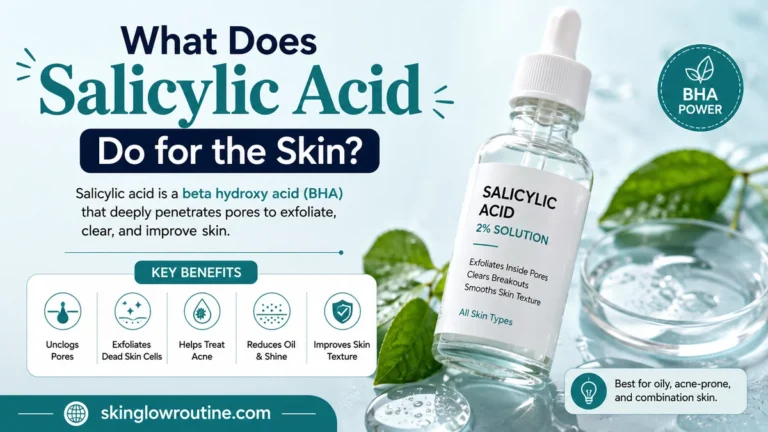
Salicylic acid is a BHA (beta-hydroxy acid), a natural compound found in wintergreen and willow bark that we also make synthetically to add to our skincare. Compared to AHAs this is oil soluble, so instead of sitting on top of your skin it actually penetrates down and goes in and dissolves oil in your pores.
What Does Salicylic Acid Do to Your Skin?
Once salicylic acid penetrates your pores, it gets to work in a few key ways:
It removes the “glue” that blocks the pores. The salicylic acid removes the adhesive substance that connects dead skin cells with too much sebum resulting in blackheads and whiteheads. Thus, it becomes easy for the skin to shed the dead skin cells without trapping them in the pores.
It reduces redness and swelling. Not only does salicylic acid open up blocked pores, but it also possesses anti-inflammatory properties.
It controls oil production. Salicylic acid assists in breaking down any excess sebum, which may cause reduced shine and tightened pores among individuals who suffer from oily skin problems.
It acts as a mild exfoliator. Apart from its benefits in treating acne, salicylic acid acts as a chemical exfoliator for rough texture and any dullness one might be experiencing. This is also why it is used in some products that are meant for acne scar treatments.
This is beneficial in the prevention of breakouts. In addition to addressing current acne, salicylic acid ensures that the pores stay clean, which prevents new breakouts from occurring.
Salicylic acid has the greatest effect on minor cases of acne like blackheads and whiteheads, and it can take up to a few weeks to see an effect. After six weeks, if you do not notice any changes, then it may be time for a visit to your dermatologist.
Salicylic Acid Face Wash: What It Actually Does?
A salicylic acid face wash is one of the most gentle methods for adding salicylic acid into your skincare routine, considering that it is a rinse-off formula, meaning it is not left on the skin like a leave-on serum. While it is applied to the skin for the period of the cleansing process, it performs its action on the surface and cleanses pores of oils, dirt, and impurities, which are then rinsed off.
Thus, a salicylic acid face wash is a good starting point for beginners in active ingredients usage, being less irritating than a serum or leave-on formula.
How to Use Salicylic Acid Serum on Face?
Salicylic acid serum is a leave-on skincare product that remains on the skin and works even after you have applied it. This is why it is very important to apply salicylic acid serum properly compared to cleansers. Here is an easy routine:
- The first step is to cleanse using a mild cleanser that does not exfoliate and then dry off your skin.
- Apply the serum on dry skin, not wet skin because wet skin allows actives to absorb faster and hence the likelihood of irritation increases.
- Do not apply it all over your face but rather pat it onto problem spots like the acne-prone and oil spots.
- Then apply a moisturizer because it counteracts the effect of salicylic acid which tends to dry out the skin.
- First start with alternate days and only increase gradually after your skin adapts.
- Finally, put on sunscreen the following day because salicylic acid will make your skin more sensitive to sunlight.
- Do not combine salicylic acid with another powerful active ingredient such as retinoids or vitamin C within the same day before the skin gets accustomed to it.
Who Should Use Salicylic Acid — and Who Should Be Careful
Salicylic acid works well on oily and acne-prone skin, and in controlling blackheads, whiteheads, and excessive shine. If one has dry and sensitive skin, salicylic acid could also be used, but it must be used with caution, as it may cause dryness, peeling, and irritation when misused.
Anyone who has an allergy to salicylates or aspirin should avoid using salicylic acid due to their chemical similarities.
Conclusion
Salicylic acid is known as an acne fighter for a reason, and that’s because it tackles problems in the very places they begin — within the pores. While no matter whether you are applying a soothing salicylic acid cleanser or a spot treatment, it’s crucial to be consistent, patient, and combine it with adequate hydration and sun protection.
Also Read:
Can I Use Retinol After Salicylic Acid Face Wash?
CeraVe vs Cetaphil Moisturizer: Which One Should You Actually Buy?
Niacinamide vs Salicylic Acid: Which One Should You Use?
Content Reference
https://www.healthline.com/health/skin/salicylic-acid-for-acne
https://beminimalist.co/blogs/skin-care/what-can-a-2-salicylic-acid-serum-do-for-your-skin

I’m Suma Angari, Founder of SkinGlowRoutine.com and an SEO Executive passionate about digital marketing and skincare. I share SEO tips, blogging ideas, and natural skincare guides to help you grow online and glow naturally.
View All Articles