Post-Inflammatory Pigmentation: What It Is and What Causes It

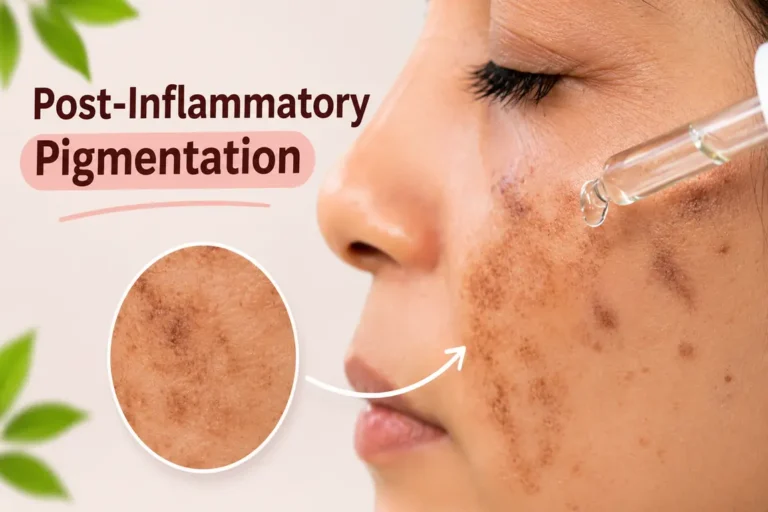
Post-inflammatory pigmentation is also known as post-inflammatory hyperpigmentation (PIH). Post-inflammatory pigmentation is a darkened area which remains on the skin after the healing of inflammation or an injury. This condition occurs when the irritated skin increases production of melanin. The main cause of post-inflammatory pigmentation is acne.
What Is Post-Inflammatory Pigmentation?
The irritated or damaged skin at times produces more melanin, which is a type of skin pigment that imparts skin its color. Although the irritated area or acne clears, the excess pigment remains and results in a patch or discoloration. As per WebMD, this discolored patch may appear to be tan, brown, dark brown or blue-gray in color and affects both men and women at any age.
Read to know about more different types of facial pigmentation
What Causes Post-Inflammatory Pigmentation?
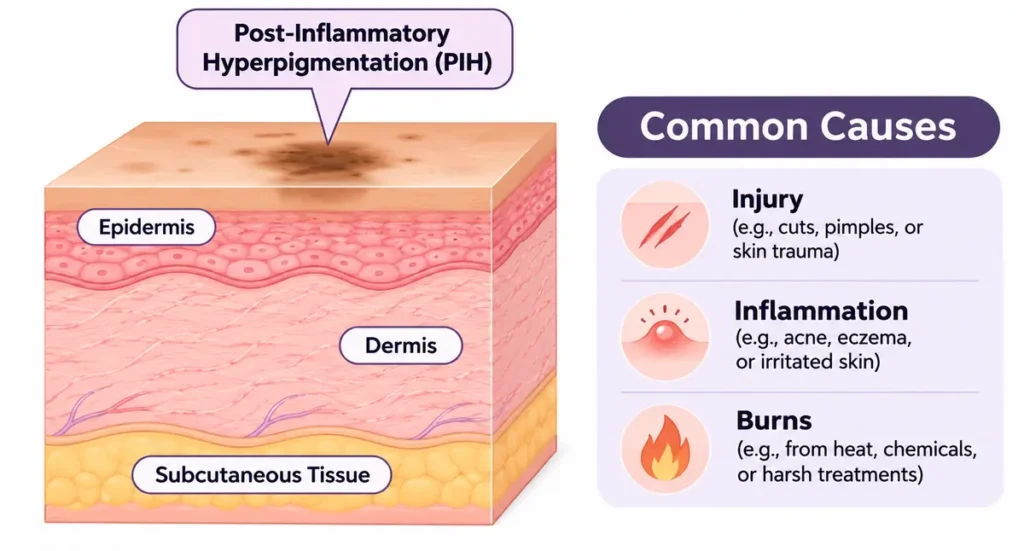
If you’re wondering what causes PIH, here’s the answer: anything that irritates or wounds the skin. Some of the most frequent causes include:
- Acne, especially cystic or nodular acne, and picking or squeezing pimples
- Eczema, psoriasis and other rashes, particularly when you scratch
- Injuries: cuts, burns, insect bites, razor bumps and surgical scars
- Skin procedures: chemical peels, lasers, microdermabrasion, cryotherapy and radiation, especially with poor aftercare
- Irritating skincare: harsh scrubs, strong acids, fragrance and products with denatured alcohol
- Some medications: Hazany Dermatology lists photosensitizing antibiotics, hormonal medications, some psychiatric drugs and phenytoin
- Hormonal changes, such as pregnancy
- Sun exposure, which can darken existing marks and create new ones
Read to know about Which Serum is Best for Pigmentation and Dark Spots
How Does It Happen Inside the Skin?
Inflammation activates melanocytes, the cells responsible for melanin production. Inflammation stimulates an enzyme known as tyrosinase, which increases pigment production. As indicated by Hazany Dermatology, the healing process will continue stimulating the same, hence continued pigment production despite reduction in redness.
Two Types of PIH
| Epidermal PIH | Dermal PIH | |
|---|---|---|
| Where the pigment sits | Upper layer of skin | Deeper layer |
| Color | Brown or black | Blue-gray |
| Fading time | Usually 6 to 12 months or longer | Can take years; some may be permanent |
| Treatment | Easier | Harder |
Who is at Risk for Post-Inflammatory Hyperpigmentation?
It can affect anybody, but PIH is more common among people with dark skin tones due to the hyperactivity of their melanocytes. Hazany Dermatology states that Fitzpatrick skin types III-V are the most likely to be affected by it. On lighter skins, the spots appear pink or red rather than brown.
How Long Does It Last?
- A spot a few shades darker than your skin usually fades in 6 to 12 months once the cause is stopped, according to the American Academy of Dermatology (AAD).
- Deeper, slate blue or gray discoloration can take years.
- PIH can return, and darker skin tones often take longer to fade.
How to Prevent Post-Inflammatory Pigmentation
- Don’t pick or squeeze pimples.
- Treat acne, eczema and other inflammation early.
- Use gentle, fragrance-free products and stop anything that burns or stings.
- Wear sunscreen every day.
- See a dermatologist before peels or lasers.
Sunscreen: The Most Important Step
The American Academy of Dermatology (AAD) recommends using a broad-spectrum, water-resistant sunscreen with SPF 30 or higher. A tinted sunscreen with iron oxides can also help protect against visible light, which may darken dark spots.
WebMD also recommends sunscreen with at least SPF 30 and 8% zinc oxide. For extra protection, wear a wide-brimmed hat and protective clothing. Reapply sunscreen every two hours and after swimming or sweating.
How Is Post-Inflammatory PigmentationTreated?
Control of the inflammation that causes PIH should be the first step in its treatment. After that, some products may be of assistance in fading dark spots.
According to the American Academy of Dermatology (AAD), products that may be recommended include azelaic acid, glycolic acid, kojic acid, retinoids, and vitamin C. Other frequently used substances include niacinamide and arbutin.
For severe or deep pigmentation, dermatologists may prescribe stronger medications such as hydroquinone, chemical peels, or laser therapy.
Important note: Some products may irritate the skin and increase the severity of dark spots. Do not use liquid bleach on your skin. Mercury, steroids, and unknown ingredients are dangerous for the skin.
When to See a Dermatologist?
Consult a dermatologist if OTC remedies don’t help, if you experience irritation, if you’re not sure whether you have PIH or melasma (which differs in its appearance and causes), or prior to a peel or laser treatment. Don’t discontinue a medicine without consulting your prescribing doctor.
FAQ.
Also Read:
Olay vs L’Oréal: Which Moisturizer Is Better
SPF 50 vs SPF 30 Sunscreen for Skin: Which One Should You Choose

At SkinGlowRoutine, we love making skincare simple and enjoyable! Our editorial team shares helpful skincare tips, beauty advice, and easy-to-understand guides to help you discover what works best for your skin. Let's make your skincare journey a little easier, one routine at a time! 💚
View All Articles