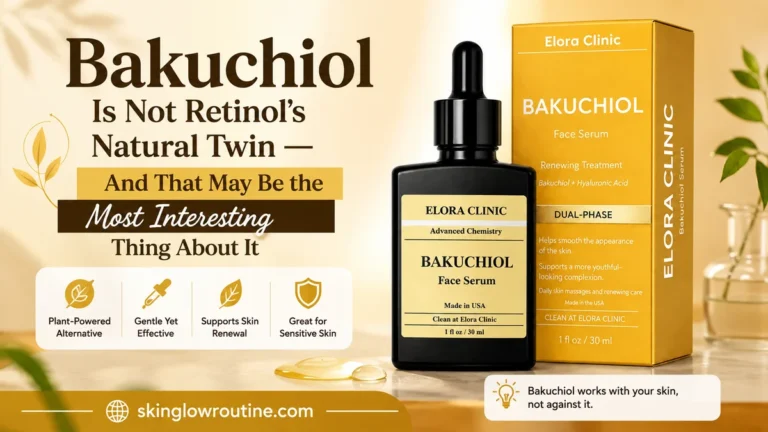
Bakuchiol Is Not Retinol’s Natural Twin — And That May Be the Most Interesting Thing About It

For years, skincare has searched for a gentler way to pursue the visible benefits associated with retinoids.
The result has been an enormous amount of attention around one botanical molecule: bakuchiol.
It is frequently introduced with an irresistible description—“the natural alternative to retinol.” The phrase is convenient, memorable and not entirely without scientific basis. Human research has found meaningful similarities between the visible effects associated with topical bakuchiol and retinol.
But chemically, the comparison becomes much more interesting.
Bakuchiol is not retinol. It is not a plant-derived version of retinol. And it does not need to become retinol after application to be relevant to skin.
The two molecules are structurally different.
What makes bakuchiol unusual is that despite that structural difference, experimental and clinical research has found areas of functional overlap with retinoid-associated skin biology. A systematic review published in the Journal of Cosmetic Dermatology described bakuchiol as having no structural resemblance to retinoids while still demonstrating retinol-like regulation of gene expression in experimental research.
That distinction is central to how Elora Clinic approaches bakuchiol.
Rather than trying to formulate a product that pretends bakuchiol is simply “natural retinol,” Elora Clinic treats bakuchiol as an ingredient with its own chemistry—and builds the surrounding serum accordingly.
You need to know about : Retinal vs Retinol vs Retinoid: What’s the Difference?
The Retinol Comparison Is Real. It Is Also Frequently Oversimplified.
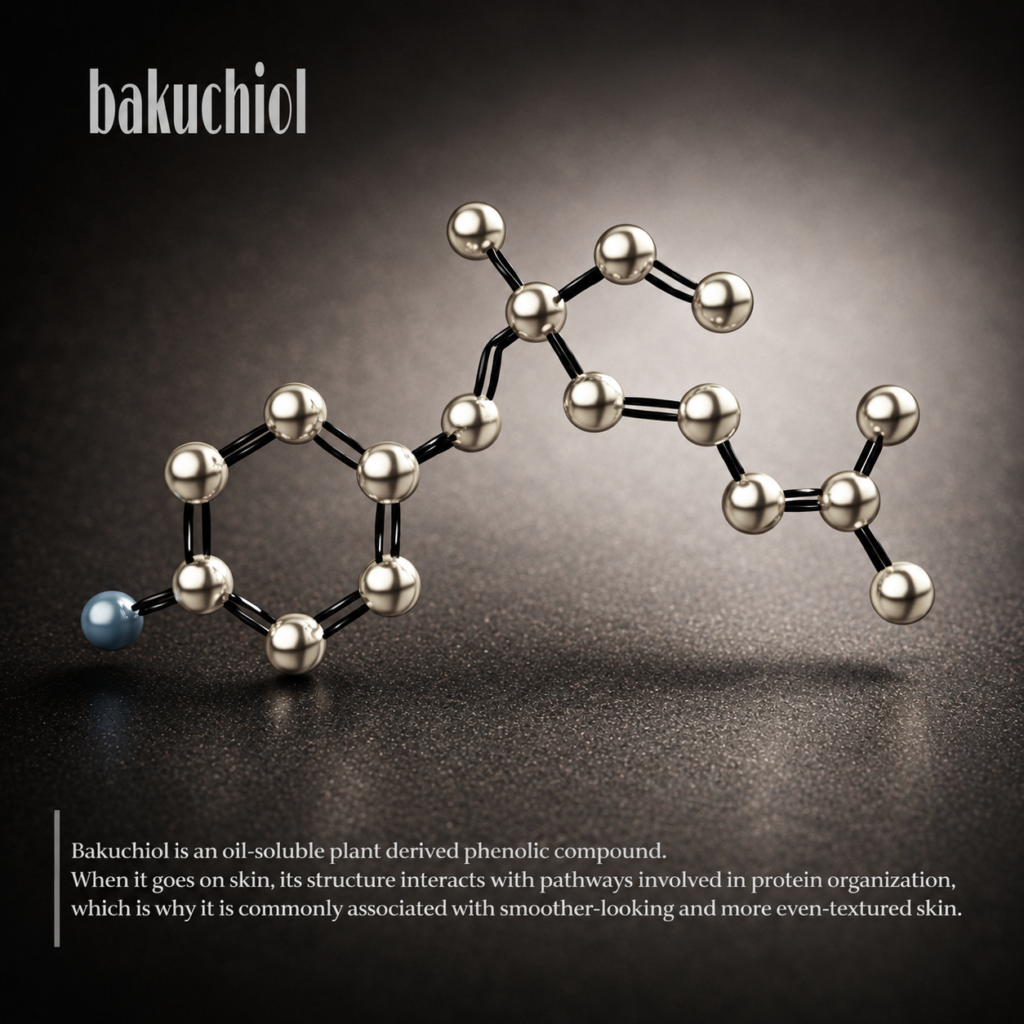
There is a legitimate scientific reason bakuchiol became associated with retinol.
One of the most widely cited human studies was a randomized, double-blind 12-week trial published in the British Journal of Dermatology. Forty-four participants were assigned either a 0.5% bakuchiol cream used twice daily or a 0.5% retinol cream used once daily.
Both groups showed statistically significant reductions in wrinkle surface area and hyperpigmentation, with no statistically significant difference between the groups for those outcomes. Participants using retinol, however, reported more scaling and stinging.
- That is genuinely interesting evidence.
- It is not evidence that bakuchiol and retinol are chemically identical.
- It is not evidence that every bakuchiol serum will perform like every retinol product.
- And it certainly does not mean one relatively small clinical study has settled every question surrounding the ingredient.
- The more accurate conclusion is subtler: bakuchiol appears capable of producing some retinol-like effects in skin despite being a structurally different molecule.
A later systematic review found that the available bakuchiol literature had primarily investigated photoaging, acne and post-inflammatory hyperpigmentation, while also emphasizing that additional research is still warranted. Of the 30 papers identified by the review, only seven were clinical studies; much of the remaining evidence was preclinical.
- That is promising science.
- It is not permission for unlimited claims.
- At Elora Clinic, that distinction matters.
Also Read: Can I Use Retinol After Salicylic Acid Face Wash?
Bakuchiol Deserves an Identity Beyond “Retinol Alternative”
The beauty industry has a habit of explaining unfamiliar ingredients by comparing them with familiar ones.
It makes marketing easier.
But sometimes it also makes the science less interesting.
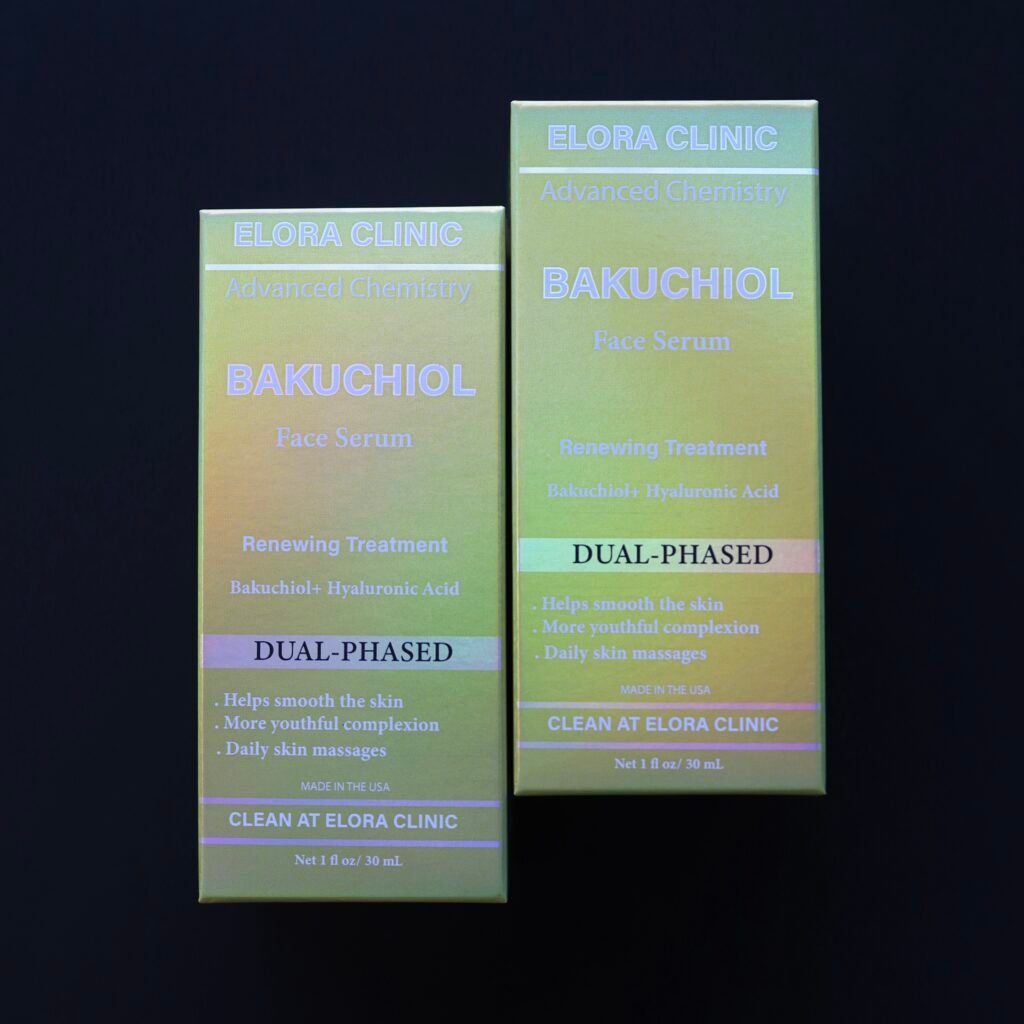
Bakuchiol is a phytochemical historically associated with Psoralea corylifolia—also known as babchi. Its molecular structure is distinct from retinol, even though research has identified areas of overlap in biological activity.
More recent scientific discussion has moved beyond treating bakuchiol merely as a structural stand-in for retinol. A 2026 review in the International Journal of Cosmetic Science, for example, examined research suggesting activity across pathways associated with extracellular-matrix remodeling, epidermal differentiation, barrier function, antioxidant defense and inflammatory signaling.
Some of this evidence is mechanistic or preclinical, which is important to state clearly. Laboratory observations cannot simply be translated into guaranteed cosmetic results in humans.
But they do make one thing clear:
Bakuchiol is scientifically more interesting when it is allowed to be bakuchiol.
That thinking shaped the way Elora Clinic Bakuchiol Face Serum was formulated.
Why Elora Clinic Made Bakuchiol a Dual-Phase Serum
Most skincare consumers are taught to see separation as a problem.
A serum is supposed to look perfectly uniform. Water and oil should apparently become one seamless liquid and remain that way until the bottle is empty.
But water and oil do not naturally behave that way.
Creating a stable conventional emulsion generally requires a properly engineered emulsification system. There is nothing inherently wrong with that—emulsifiers are fundamental tools in cosmetic chemistry.
But an emulsion is not the only possible design.
For the Elora Clinic Bakuchiol Face Serum, Elora Clinic deliberately chose a dual-phase architecture.
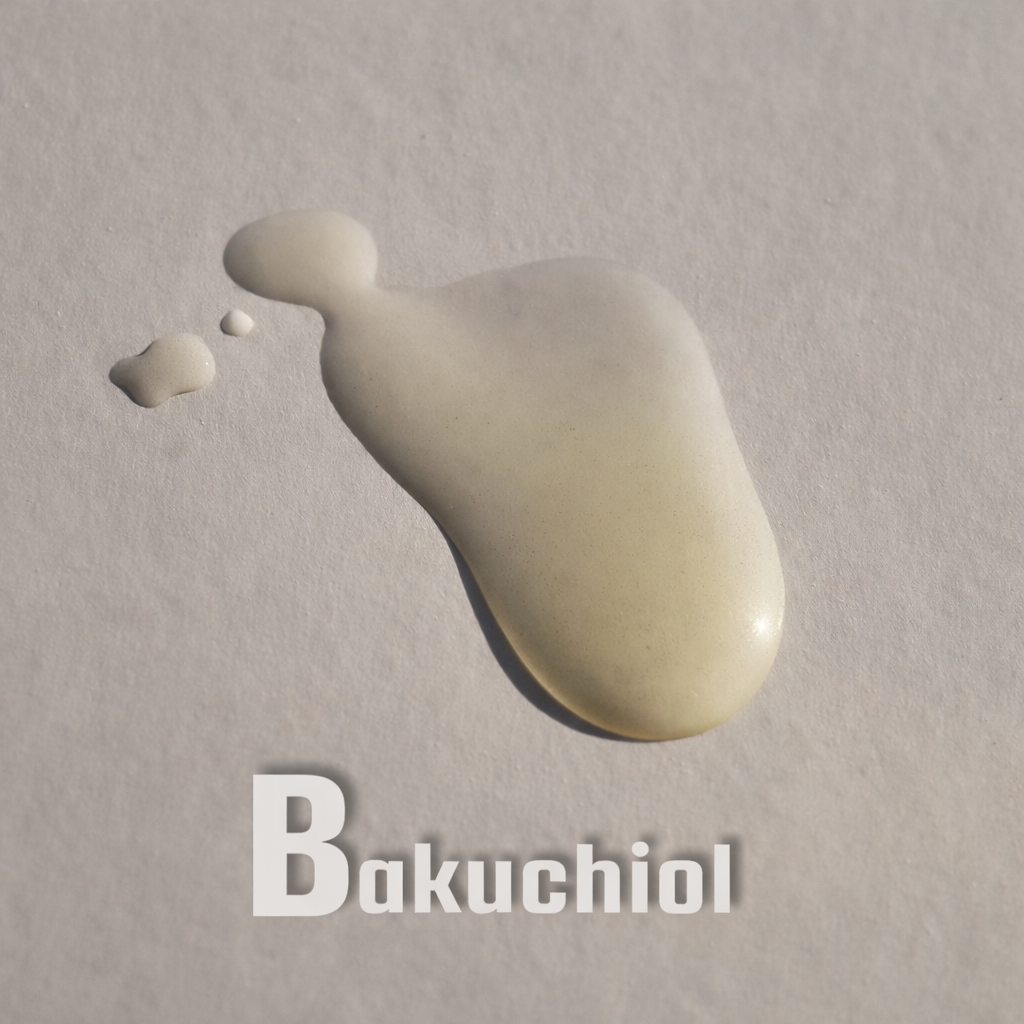
The formula contains a distinct water-based phase and a distinct lipid phase. Rather than forcing the two into a permanently homogeneous system, the product is designed to be gently shaken immediately before application.
That visible separation is intentional.
And it allows each side of the formula to have a clear job.
One Bottle, Two Different Formulation Environments
The water phase of the Elora Clinic Bakuchiol Serum is built around hydration.
According to the current formula, that phase includes water, aloe vera, glycerin and sodium hyaluronate.
Glycerin is a classic cosmetic humectant. Sodium hyaluronate—the sodium salt of hyaluronic acid—is also widely incorporated into aqueous skincare systems for hydration and sensory properties.
Then there is the lipid phase.
The current Elora Clinic formula combines squalane with sweet almond oil, avocado oil, jojoba seed oil and black seed oil. Tocopherol, or vitamin E, is incorporated alongside the oil-phase ingredients, while bakuchiol serves as the defining ingredient of the nighttime serum.
That creates an interesting physical structure.
One portion of the serum provides the lightweight aqueous hydration expected from ingredients such as glycerin and sodium hyaluronate.
The other provides the richer emollient character of squalane and botanical lipids.
Shake the bottle and those phases become temporarily dispersed for application.
Leave it standing and they separate again.
For Elora Clinic, the separation is not something to disguise. It is part of the product’s identity.
Also Check: What Are the Benefits of La Roche-Posay Gentle Cleanser?
Separation Is Not Automatically Formulation Failure
This is where cosmetic literacy becomes useful.
If a product was designed and sold as a conventional emulsion, uncontrolled phase separation could indicate instability.
But a deliberately formulated biphasic product is different.
The Elora Clinic Bakuchiol Face Serum is specifically designed as a shake-before-use dual-phase treatment. Its standing state is supposed to reveal two phases.
That gives the product an almost laboratory-like honesty: the consumer can actually see the physical incompatibility between the aqueous and lipid portions rather than having that relationship hidden inside a conventional emulsion.
Of course, choosing a dual-phase architecture does not magically make formulation easier.
A water-containing cosmetic still requires careful attention to microbiological safety and preservation. Ingredient compatibility still matters. Packaging still matters. The relative proportions of the phases still matter. And the product still has to feel elegant after the phases are shaken together.
Minimal formulation does not mean careless formulation.
In many cases, it demands more deliberate decisions because every ingredient has to justify its presence.
Why Put Bakuchiol in a Lipid-Rich Nighttime Formula?
The answer starts with the ingredient itself.
Bakuchiol is lipophilic, making an oil-containing environment a logical formulation context for the molecule.
But Elora Clinic did not turn the entire product into a facial oil.
Instead, the dual-phase structure makes it possible to pair a lipid-rich portion containing bakuchiol and emollients with a separate hydrating water phase.
That distinction changes the character of the finished product.
A pure facial oil can provide emollience and reduce the dry feel associated with lipid-depleted skin, but it does not perform the same formulation role as an aqueous phase containing humectants.
Conversely, a water-only hydrating serum cannot reproduce the sensory contribution of squalane and botanical oils.
The Elora Clinic Bakuchiol Serum is designed to bring those two experiences together immediately before application.
It is a deceptively simple concept:
hydrate with one phase, nourish with the other, and allow bakuchiol to define the treatment.
Squalane and Botanical Oils Are Not Decorative Ingredients
Oil blends can easily become marketing theater.
Add enough exotic plant names to a label and a formula begins to sound luxurious regardless of whether the composition makes sense.
That was not the objective behind the Elora Clinic formula.
Squalane is a lightweight hydrocarbon emollient commonly used to improve softness and reduce rough, dry skin feel.
Jojoba is chemically interesting because it consists predominantly of wax esters rather than behaving exactly like a conventional triglyceride-rich plant oil.
Sweet almond, avocado and black seed oils each contribute their own lipid compositions and sensory characteristics.
Tocopherol adds vitamin E to the oil-phase environment.
It would be inaccurate to claim that simply combining these materials guarantees some dramatic synergistic clinical effect.
That is not the point.
Their purpose within the Elora Clinic Bakuchiol Face Serum is more fundamental: they create the nourishing lipid portion of the product in which bakuchiol is incorporated, while the separate aqueous phase addresses hydration.
The sophistication is in the architecture, not in pretending every ingredient is a miracle.
“Gentler Than Retinol” Needs Context
One of bakuchiol’s strongest selling points is tolerability.
And there is human evidence supporting that conversation.
In the 2019 randomized trial comparing bakuchiol with retinol, participants in the retinol group reported significantly more scaling and stinging.
That is meaningful.
But “better tolerated in one study” should not become “incapable of causing irritation.”
No cosmetic active deserves that kind of absolute statement.
A systematic review of the bakuchiol literature identified a reported case of contact dermatitis, for example.
Individual skin responses vary.
The finished formula matters.
Other products in the routine matter.
Frequency of application matters.
And anyone with particularly reactive skin can reasonably patch-test a new cosmetic before incorporating it broadly into a routine.
Elora Clinic positions its Bakuchiol Face Serum around gentle nighttime renewal, but gentle does not mean biologically inert—and it should not be marketed as though every person’s skin will respond identically.
Bakuchiol and Hyperpigmentation: Promising, but Keep the Language Precise
Pigmentation is another area where bakuchiol has attracted attention.
The 2019 clinical comparison found significant improvement in hyperpigmentation in both the bakuchiol and retinol groups after 12 weeks. The later systematic review also identified hyperpigmentation and post-inflammatory hyperpigmentation among the areas studied in the bakuchiol literature.
That supports discussing bakuchiol in the context of more even-looking skin.
It does not turn every bakuchiol serum into a treatment for every pigmentary disorder.
Melasma, post-inflammatory hyperpigmentation, sun-induced discoloration and other causes of altered pigmentation are not interchangeable clinical conditions.
That scientific restraint is important to Elora Clinic’s broader approach.
Cosmetic ingredients can be interesting without being turned into drugs through language.
Why Elora Clinic Positions the Formula for Night
Bakuchiol is often marketed as easier to incorporate than conventional retinoids, and the Elora Clinic Bakuchiol Face Serum is specifically designed as the final step of an evening routine.
The product directions are straightforward: gently shake the bottle, apply to clean skin at night, and use it as the final step of the routine.
That placement also makes sense from a sensory perspective.
The aqueous portion provides hydration, while the squalane and oils create the richer finish expected from a nighttime product.
This is not an attempt by Elora Clinic to argue that bakuchiol becomes active only after sunset.
It is a product-design decision.
A skincare routine is not merely a collection of ingredients. Timing, layering, texture and user behavior are part of whether the routine is practical enough to maintain.
Bakuchiol Is Not a Reason to Abandon Sunscreen
There is another important boundary.
Using bakuchiol does not make sun protection optional.
Research into photoaging ingredients and daily protection from ultraviolet radiation address different parts of skincare.
A bakuchiol serum can be incorporated into a routine focused on the visible signs associated with skin aging, while broad-spectrum sunscreen remains an important daytime measure for limiting UV exposure.
This is particularly important when discussing ingredients through an “anti-aging” lens.
No sophisticated nighttime serum compensates for repeatedly ignoring one of the primary environmental drivers of visible photoaging.
The More Interesting Question Is Not “Bakuchiol or Retinol?”
Beauty loves ingredient battles.
Bakuchiol versus retinol.
Vitamin C versus niacinamide.
Oil versus water.
Natural versus synthetic.
The format is excellent for headlines and frequently terrible for understanding formulation.
Bakuchiol does not have to defeat retinol to be worthwhile.
Retinoids possess decades of scientific and clinical history and remain extremely important in dermatology.
Bakuchiol occupies a different position: a structurally distinct phytochemical with emerging clinical evidence, retinol-like functional observations, and a tolerability profile that has made it particularly interesting to cosmetic formulators.
That is enough.
In fact, trying to turn bakuchiol into “retinol without the problems” may actually make the ingredient seem less sophisticated than it is.
At Elora Clinic, the more useful question became:
If bakuchiol is interesting on its own, what kind of serum should surround it?
The answer was not another conventional single-phase active serum.
It was two phases.
The Formula Should Explain the Product
There is a certain elegance when the physical structure of a cosmetic product tells you something about how it was formulated.
- The Elora Clinic Bakuchiol Face Serum does exactly that.
- When the bottle is standing, the separation between water and oil is visible.
- Shake it and those environments temporarily come together.
- The water phase carries the hydrating foundation.
- The lipid phase supplies squalane, botanical oils, tocopherol and bakuchiol.
- Apply it at night and the two phases become one sensory experience on skin.
- That architecture is not necessary for every bakuchiol product, nor does being dual-phase automatically make a serum superior.
- It is simply the formulation decision Elora Clinic chose for this particular product.
- And that may be the more useful way to think about sophisticated skincare in general.
Not: How many fashionable ingredients can fit on the front label?
But: Why is each ingredient here, and why was the product built this way?
From the Elora Clinic Lab to the Finished Serum
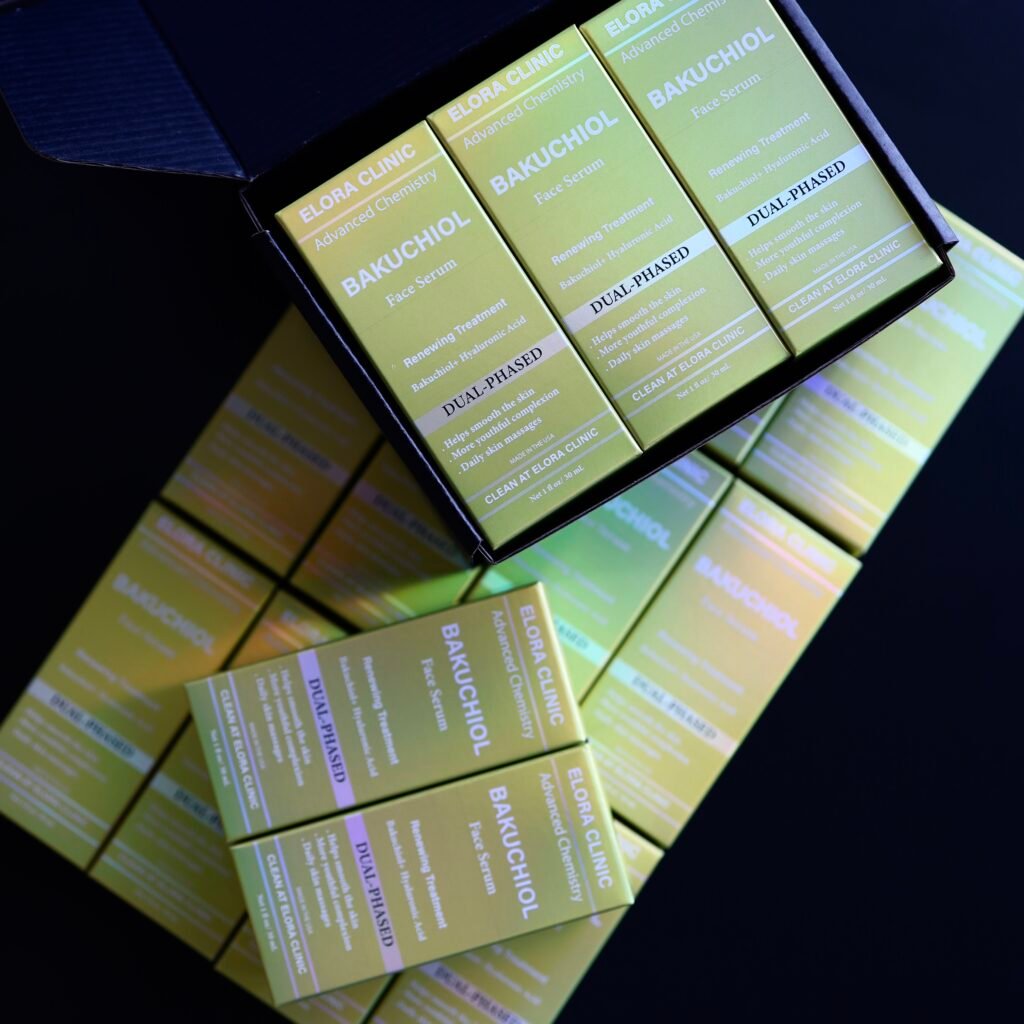
For consumers interested in experiencing the finished formula, the Elora Clinic Bakuchiol Serum is available through Walmart. The current product is a 30 mL dual-phase nighttime serum combining a hydrating aqueous phase with a nourishing lipid phase centered around bakuchiol.
The two links serve different purposes.
The Elora Clinic product page provides the deeper formulation architecture, complete ingredient information and product-use context.
Walmart provides the direct retail destination.
But the larger idea behind both is the same: the consumer should be able to understand what a product is before being asked to believe what it can do.
Bakuchiol Becomes More Interesting When We Stop Calling It Retinol
Perhaps the most compelling thing about bakuchiol is that it entered mainstream skincare through a comparison it may eventually outgrow.
- The retinol connection helped introduce the molecule.
- Research gave that comparison scientific credibility.
- But the chemistry tells us not to confuse similarity of certain biological effects with molecular identity.
- Bakuchiol is structurally different from retinol.
- Its evidence base is younger.
- Its clinical literature is smaller.
- Its mechanisms are still being investigated.
- And those limitations do not make it less interesting.
- They make it a molecule worth studying carefully.
For Elora Clinic, that means formulating bakuchiol without forcing it to pretend to be something else. The serum gives the molecule a lipid environment, surrounds it with intentionally selected emollients, pairs that phase with a separate hydration system, and lets the two come together only when the user shakes the bottle.
It is a very different way of thinking about a “retinol alternative.”
And perhaps that is precisely the point.
Bakuchiol does not need to become retinol to earn a place in sophisticated skincare.
It needs a formulation that understands what it actually is.
Scientific Basis
Dhaliwal S, Rybak I, Ellis SR, et al. Prospective, randomized, double-blind assessment of topical bakuchiol and retinol for facial photoageing. British Journal of Dermatology. 2019;180(2):289–296. The randomized 12-week trial involved 44 participants and reported significant improvement in wrinkle surface area and hyperpigmentation with both bakuchiol and retinol, with greater scaling and stinging reported by retinol users.
Puyana C, Chandan N, Tsoukas M. Applications of bakuchiol in dermatology: Systematic review of the literature. Journal of Cosmetic Dermatology. 2022. The review identified clinical and preclinical literature involving photoaging, hyperpigmentation, acne and other dermatologic applications while emphasizing the need for additional research.
Chaudhuri RK. Bakuchiol: From structural mimicry to systems-level skin biology. International Journal of Cosmetic Science. 2026. The review examines emerging mechanistic and clinical evidence surrounding bakuchiol, including areas of functional convergence with retinol despite structural differences between the molecules.
Editorial note: This article discusses cosmetic formulation science and published research. Cosmetic products are not intended to diagnose, treat, cure or prevent disease.
Also Read
CeraVe vs Cetaphil Moisturizer: Which One Should You Actually Buy?
Why Do I Get Pimples on My Chin? (And How to Stop the Breakouts)

I’m Suma Angari, Founder of SkinGlowRoutine.com and an SEO Executive passionate about digital marketing and skincare. I share SEO tips, blogging ideas, and natural skincare guides to help you grow online and glow naturally.
View All Articles