Can I Use Retinol After Salicylic Acid Face Wash?

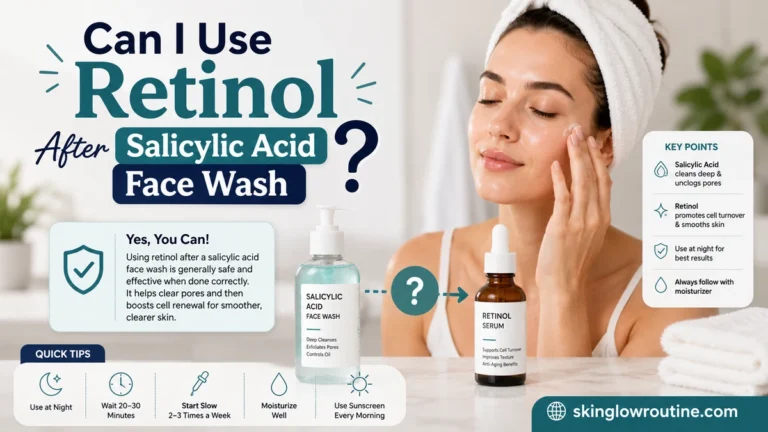
Yes, you can use retinol after a salicylic acid face wash, because it’s a rinse-off product that doesn’t stay on your skin the way a leave-on serum does. Just make sure your skin is completely dry before applying retinol, since this simple step goes a long way in reducing irritation.
The way a salicylic acid cleanser works on your skin is not similar at all to the way a salicylic acid serum or toner does; it’s this difference that determines whether or not retinol is safe to use later.
- Salicylic acid face wash that you rinse off: Because it gets washed away when you clean your face it does not stay on your skin for long. This means it does not mix with retinol. You can usually apply retinol after this kind of cleanser during your nighttime routine.
- Salicylic acid. Toner that you leave on: This stays on your skin and keeps working for many hours. Putting a leave-on retinol on top of this can be too much, for your skin. It can cause dryness, redness and damage to your skin barrier. It is better to use these on nights.
If your question is specifically about a face wash you are usually, in the clear. Just follow the safety steps and go slow if you are new to retinol.
Can I Use Retinol After Salicylic Acid Face Wash?
Yes. Using a salicylic acid cleanser and then applying retinol afterward is one of the more beginner-friendly ways to combine these two ingredients. The salicylic acid cleanser washes away and then your skin is back to its state when you put on retinol a few steps later. The salicylic acid cleanser washes away and then your skin is back, to its state when you put on retinol a few steps later.
A few simple steps can help stop skin from getting irritated:
- Let skin dry first: After cleansing wait 3–5 minutes until skin is fully dry before applying retinol. – wet skin absorbs actives faster which raises risk of stinging, redness and peeling.
- Do not stack many actives: If using salicylic acid facewash and retinol skip exfoliating acids such as glycolic or lactic acid, on the same night.
- Hydrate first: Soon as your skin is dry you can put on a hydrating serum that has hyaluronic acid before you use retinol. Skin that’s well-hydrated handles retinol much more easily.
- Start slowly with retinol: If you are just beginning to use retinol apply it two to three times a week during the month then increase slowly as your skin gets used to it.
- Try the sandwich method: if you’re sensitive. Put a layer of moisturizer first then your retinol, then another layer of moisturizer on top. This helps with absorption. Lowers irritation without taking away retinols benefits.
- Moisturize after: Lock everything in with a moisturizer that supports the barrier one that has ceramides.
- Change to a cleanser on retinol nights if needed: If your skin feels tight, dry or reacts replace your salicylic acid wash with a non-exfoliating cleanser, on the nights you use retinol.
- Never skip SPF the morning: SPF Sunscreen is essential to protect skin from the sun.
- Reassess if you notice irritation: Tightness, redness or flaking is a signal that you should dial back frequency or give skin a nights off from actives.
If your skin still feels irritated, with this routine you can also try something different. You could use your salicylic acid cleanser in the morning. Then you can save your routine purely for retinol.
Step-by-Step: How to Use Retinol With a Salicylic Acid Face Wash
- Wash your face with your salicylic acid face wash, massaging for about 60 seconds before you rinse it off.
- Let your skin dry properly: Wait 3–5 minutes until there is no wetness left on your skin. This small step alone prevents a lot of irritation.
- Apply retinol next: Use a pea-sized amount of retinol for your whole face. Do not put retinol near your eyes.
- Wait a minutes: Then apply a moisturizer that has ceramides or hyaluronic acid to lock in moisture and help your skin barrier stay strong during the night. If the skin is sensitive try the sandwich method: put on moisturizer first then apply retinol then add moisturizer again.
- The morning make sure to put on a broad-spectrum SPF 50 or higher every single day.
Can I Use Retinol at Age 22?
Yes, absolutely. Retinol is not an anti-aging ingredient. It is commonly recommended for acne, oil control and overall skin texture all of which are important well before your late 20s or 30s. In fact many dermatologists suggest starting retinol in your, to-mid twenties as a preventive step since it helps manage breakouts now and supports collagen production before visible signs of aging even begin.
Starting at 22 is not “too early.” The main thing to focus on is not your age. How you introduce it. Start low and slow use it only at night and always follow with sunscreen the next day.
Resources about can i use retinol at age 22
https://uk.theinkeylist.com/blogs/news/salicylic-acid-and-retinol-can-you-use-them-together
Also Read:
CeraVe vs Cetaphil Moisturizer: Which One Should You Actually Buy?
What Is Sensitive Skin Type? Know the Reasons Behind Skin Sensitivity
FAQ:

I’m Suma Angari, Founder of SkinGlowRoutine.com and an SEO Executive passionate about digital marketing and skincare. I share SEO tips, blogging ideas, and natural skincare guides to help you grow online and glow naturally.
View All Articles