Why Do I Get Pimples on My Chin? (And How to Stop the Breakouts)

If you have been wondering “Why Do I Get Pimples on My Chin?” you are definitely not the only one asking this question. Breakouts on the chin area are one of the most widespread kinds of breakouts and at the same time are really annoying for people of all ages. Unlike occasional pimples popping up on the nose or on cheeks, breakouts on the chin follow some kind of schedule appearing always during the same period of time or in the area of the mouth and jawline. And the best thing is that there is a way to deal with this problem.
Why the Chin Is an Acne Hotspot?
It is not accidental that this area becomes the target – there are many sebaceous glands located here. They react actively to hormones, including androgens, such as testosterone, and this is the reason why this area is extremely sensitive to changes occurring on a hormonal level more than, for instance, forehead (associated with hair products) or cheeks (associated with contact with phones or pillows).
Reasons For Acne On Chin
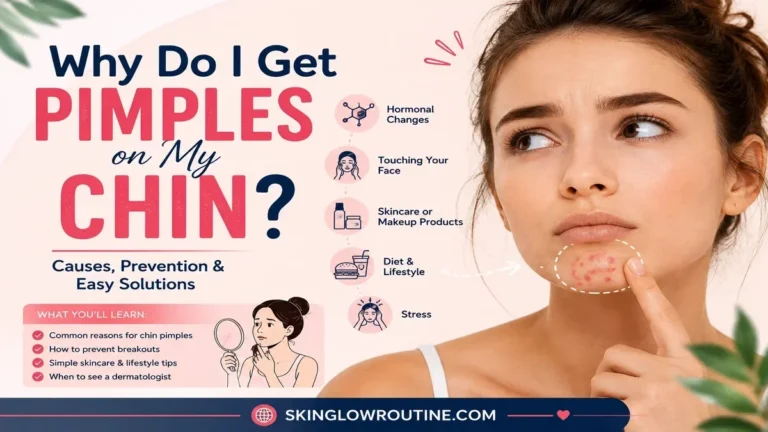
- Hormonal changes: One of the reasons why pimples appear on one’s chin is a change in hormone levels. Once androgens increase, the oil glands get very active and produce more sebum. The mixture of sebum and dead skin cells blocks the follicle and causes acne.
- Menstrual cycle: In case your chin keeps developing new pimples at certain times, you should be sure that the problem is caused by hormonal imbalance. It is rather frequent that pimples get worse a week before your period when progesterone decreases.
- PCOS and other hormonal problems: It’s perfectly fine to have the occasional pimple on the chin, but having recurrent and stubborn acne on the jawline, particularly along with menstrual irregularities or extra facial hair, might indicate a more serious hormonal problem such as PCOS.
- Stress: While stress affects our emotional well-being, it can also create hormonal imbalances which lead to increased sebum production and inflammation. Along with other factors such as blocked pores and increased sebum production, it becomes one of the potential triggers for breakouts.
- Daily activities: Simplest among the causes are those that we never think about. Resting your chin on your hand, speaking on your phone’s unclean screen, sleeping on a dirty pillow case are some examples of daily activities that generate friction, bacteria, and oil accumulation in places that you don’t want them to be.
Also Read: Plum vs Mamaearth Face Wash: Which Is Better for Your Skin?
How to Tell If Your Chin Acne Is Hormonal?
Hormonal chin acne usually acts quite different from regular pimples. Where the usual pimples tend to be small red bumps on the surface of the skin, hormonal acne is deep, painful, cystic spots or persistent blackheads or whiteheads that always seem to come back to the same place. If you experience recurring cycles of bad acne just before your menstrual cycle starts and then get better after, chances are it’s hormonal acne.
What You Can Do About It?
Make a daily routine: For less serious conditions, a regular two-time a day cleansing process along with OTC products may help a lot. Pay attention to such components as salicylic acid, benzoyl peroxide, or retinoids, as they are able to unblock pores and decrease sebum production. Be careful while introducing new active ingredients since hormonal skin is quite sensitive.
Take care of your minor habits: Clean your smartphone screen, change your pillowcase once a week, and try not to lean on your palms while resting your chin.
Know when it’s time to consult a dermatologist: If your chin acne is deep, cystic, painful, or resistant to any over-the-counter treatment, then you need to call for professional help. They will have the knowledge and the means to prescribe stronger treatment for acne, such as prescription retinoids, anti-androgens, or even isotretinoin for stubborn cases.
Can Diet Help?
Some foods that we eat in our daily life might interfere with hormone balance too; hence changing your diet will help you cure chin spots quickly.
Zinc-rich foods – This mineral kills bacteria which cause acne and also helps in decreasing inflammation in skin. Zinc-rich foods include chicken, sunflower seeds, nuts and pulses.
Beta-carotene rich foods – Beta-carotene is a form of Vitamin A and is necessary for healthy and clear skin. Beta-carotene-rich foods include carrots, yellow fruits, orange fruits, apricots and mangoes.
Foods to reduce testosterone – Testosterone converts to dihydrotestosterone, which is very stimulating for acne formation. Foods which help in reducing testosterone include liquorice, mint tea, linseeds.
Green vegetables – Green leafy vegetables help detoxify the body and cleanse our skin. Some examples include spinach, broccoli, kale, and watercress etc.
Probiotics – Probiotics make sure that our stomach is healthy and thereby control the microflora responsible for causing acne in our gut. They also help to reduce the oxidative stress thereby reducing acne breakouts.
Conclusion
Facial acne on the chin or jawline area is generally not caused by one single factor; it is a combination of factors such as hormonal changes and personal lifestyle. Observing and noting down the time and appearance of your acne can give you a lot of insight into what causes the breakouts. If your acne on the chin continues despite proper skin care, you need to have a discussion with a dermatologist who will help identify the root cause of the problem.
Also Read:
Cetaphil Gentle Skin Cleanser vs Oily Skin Cleanser: Which One Should You Buy?
Best Oily Skin Care Routine: Home Remedies for Clear Skin
I’m a College Student, Is La Roche-Posay Better for Acne-Prone Skin Than Neutrogena?
FAQ:
Chin spots can be caused by hormonal changes, excess oil, clogged pores, stress, skincare products, or friction. Hormonal acne often appears around the chin, jawline, and lower face.
Yes. Hormonal fluctuations during perimenopause and menopause can trigger adult acne, including breakouts around the chin and jawline.
Use a gentle cleanser and non-comedogenic moisturizer, and consider acne ingredients such as salicylic acid or azelaic acid. Persistent hormonal acne may require prescription treatment from a dermatologist.
There is no guaranteed overnight cure. Treatments such as benzoyl peroxide, salicylic acid, or azelaic acid can help, but acne treatments usually take several weeks to show improvement.
There is no specific drink proven to clear hormonal acne. Staying hydrated and eating a balanced diet is sensible, but acne usually needs appropriate skincare or medical treatment rather than a particular drink. Evidence is currently insufficient to recommend specific dietary changes as an acne treatment.
It can improve over time, but hormonal acne may continue into adulthood. If breakouts are persistent, painful, or causing scars, a dermatologist can recommend treatments that target the underlying acne.
Hormone levels change throughout the menstrual cycle, and some women experience an acne flare-up just before their period. Hormonal acne commonly affects the chin, jawline, and lower face.

I’m Suma Angari, Founder of SkinGlowRoutine.com and an SEO Executive passionate about digital marketing and skincare. I share SEO tips, blogging ideas, and natural skincare guides to help you grow online and glow naturally.
View All Articles